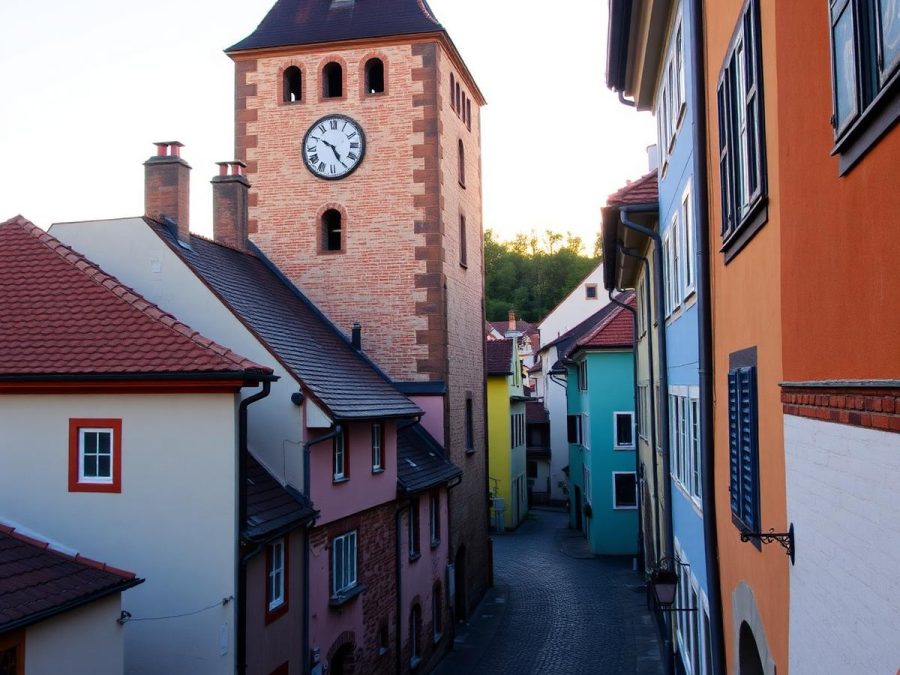
The Bridge of Lies
A small iron footbridge in the Little Square, cast in 1859. The name is a pun that outlived the joke, and the real story is better than the legend.
- How long to allow
- Five minutes
The background
It is ten metres long and it is the most photographed object in Sibiu. The ironwork was cast in 1859 at the Friedrichshütte foundry — whose name is still on one of the arches, along with the year — and the bridge opened the following year, joining the upper town to the lower.
It is the first cast-iron bridge built in Romania. That is the claim worth stating precisely: in Romania. A grander version circulates and does not survive checking.
Where the name actually comes from
You will be told the bridge creaks when someone standing on it tells a lie. It is a good story and it is not where the name came from.
The bridge rests on its abutments without a central pier — unusual enough at the time that it was called the Liegenbrücke, the lying bridge, in the sense of lying down. In German that sits one vowel away from Lügenbrücke, the bridge of lies. The pun took, the legends were fitted to it afterwards, and the Romanian name Podul Minciunilor translates the joke rather than the original.
Which is to say the bridge is named after a mistranslation that everybody kept on purpose.
Prefer to have the route organised for you?
Guided private trips and custom itineraries are arranged externally, with a local driver-guide.
View private toursOther places near Sibiu
Brukenthal National Museum
A genuine European picture gallery on the main square, opened to the public in 1817 — the oldest museum in Romania, and one of the first…
Lutheran Cathedral of Saint Mary
The Gothic church on Huet Square, with a 73-metre steeple that is the thing you navigate the old town by.
ASTRA Museum of Traditional Folk Civilisation
Ninety-six hectares of forest with several hundred real buildings moved into it — houses, watermills, workshops, whole farmsteads. Allow half a day and wear proper shoes.
Biertan Fortified Church
Three rings of wall around a church on a hill, a sacristy door with a nineteen-bolt lock, and a room where couples were sent instead of…
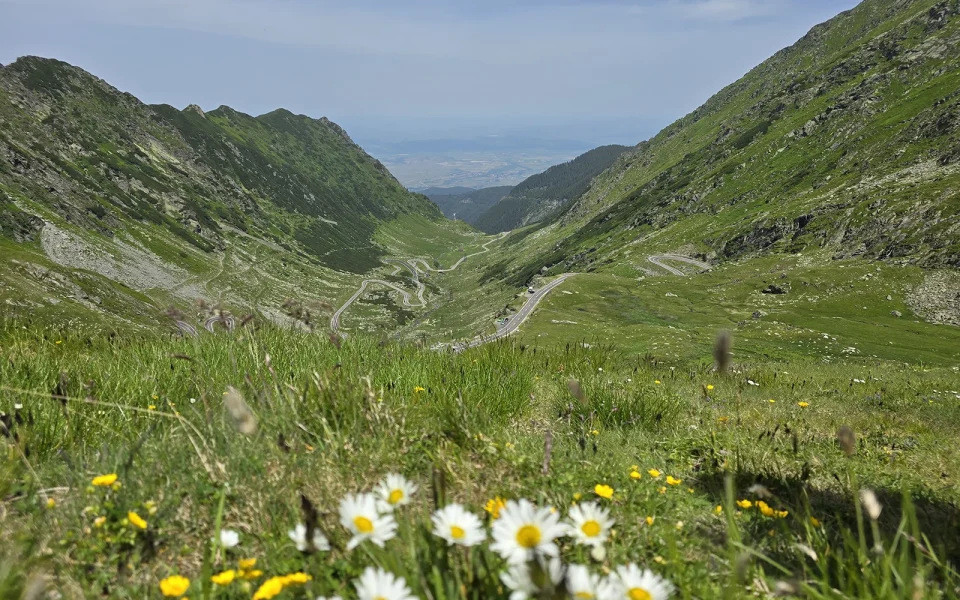
The Transfăgărășan
The road over the Făgăraș mountains. Open only in the warm months, closed by snow for the rest of the year — check the current season…
The Council Tower
The tower in the gap between the Great Square and the Little Square. It has been a granary, a fire lookout and a prison, and it…