Râșnov Citadel
A peasant fortress on a hill — not a lord's castle but a walled village the whole community moved into when raiders came.
- How long to allow
- An hour
- Best for
- The view, and the contrast with Bran
The background
Râșnov is worth pairing with Bran precisely because it is the opposite kind of building. Bran was a fortification with a garrison. Râșnov was a refuge: a walled enclosure on a hill that the villagers below moved into — with their animals and their food — and lived in until a siege passed.
That is why the inside is not a castle plan but a street plan. There are house plots, a school, a chapel. People stayed long enough to need them.
It is first mentioned in a document of 1331, and its origin is attributed to the Teutonic Knights, who were in this corner of Transylvania in the early 13th century; the Saxon community afterwards enlarged it into what survives.
The well
The story attached to the deep well in the middle is that two Ottoman prisoners were set to dig it through rock on a promise of freedom, and that it took them seventeen years. It is a legend, told as one — but the well is real, and a refuge on a hilltop with no water is a refuge that falls in a week, which is the part worth taking seriously.
Prefer to have the route organised for you?
Guided private trips and custom itineraries are arranged externally, with a local driver-guide.
View private toursOther places near Brașov
Prejmer Fortified Church
A UNESCO fortified church with 272 rooms built into its walls — one per household, for the weeks the village lived inside it.
Bran Castle
The castle sold as Dracula's, which it never was. Visit it for what it actually is — a 14th-century customs fort on a mountain pass, later…
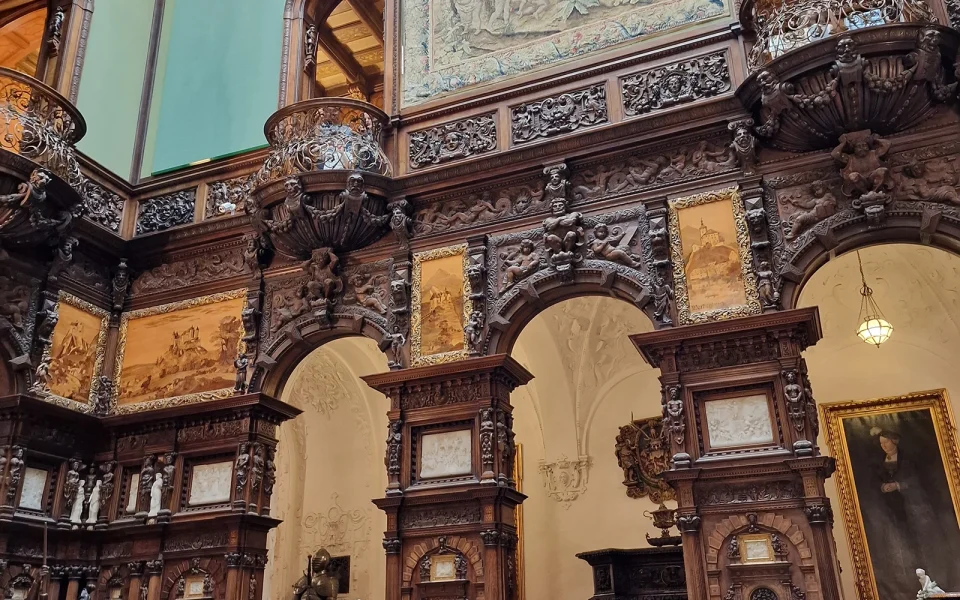
Peleș Castle
A Neo-Renaissance royal residence at Sinaia, built 1873–83, with its own hydroelectric plant. Not medieval, and much more comfortable than anything that is.
Hărman Fortified Church
Prejmer's quieter neighbour — the same defensive idea, a different shape, and far fewer people looking at it.