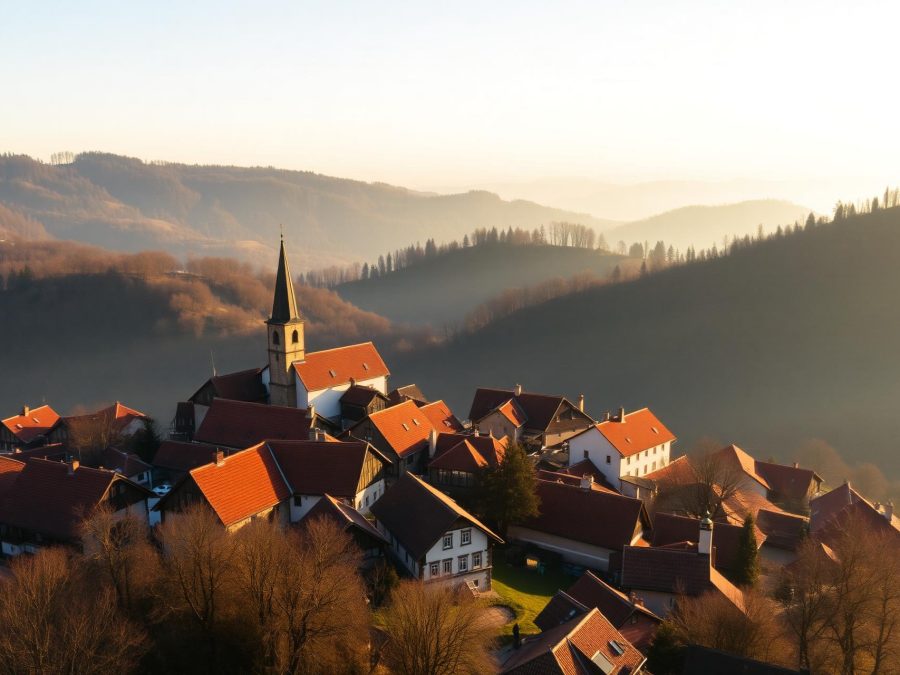
Sighișoara Citadel
A walled hill town that people still live in, inscribed by UNESCO in 1999. Coloured houses, a clock tower with moving figures, and a covered stair up to the church.
- How long to allow
- Half a day, better with an overnight
- Best for
- Evenings, once the coaches have gone
The background
Sighișoara’s citadel is a walled Saxon town on a hill, and its distinction is that it is still a town — people live inside the walls, which is unusual enough that it is among the very few permanently inhabited medieval citadels in Europe. You will often see this stated as “the only” one; the careful sources hedge it, and so do we.
It was inscribed by UNESCO in 1999 as a testimony to the culture of the Transylvanian Saxons.
What to look for
The Clock Tower is the landmark and the museum: a 14th-century tower carrying a 17th-century clock mechanism whose painted wooden figures turn on the hour. From the top you get the roofs.
The covered wooden staircase climbs from the citadel to the Church on the Hill — built covered so that schoolchildren could get up it in winter, which is a more charming reason than most fortifications can offer.
The ochre house on the square is shown as the birthplace of Vlad III. It is where his father lived, and the birth is a tradition rather than a documented fact — both the year and the place are disputed. Worth seeing; not worth believing too firmly.
Stay the night
The citadel empties in the evening. It is small enough to walk in an hour and it is a completely different place once the day visitors have left, which is the strongest argument for sleeping inside the walls rather than below them.
Sighișoara, Biertan and Viscri in a day
The three Saxon villages in one guided day, with a driver who knows which churches are open.
See this day trip