Sighișoara & Saxon Villages
A hill citadel that has been continuously inhabited since the Saxons built it, and the fortified villages spread through the hills around it. The most concentrated medieval landscape in Romania.
The ones worth planning around
What there is to visit
Everything published in Sighișoara & Saxon Villages, filterable by what you are interested in.
Biertan Fortified Church
Three rings of wall around a church on a hill, a sacristy door with a nineteen-bolt lock, and a room where couples were sent instead of…
Mălâncrav Fortified Church
The largest surviving Gothic wall painting in Transylvania, saved by being whitewashed over and found again in 1914.
Sighișoara Citadel
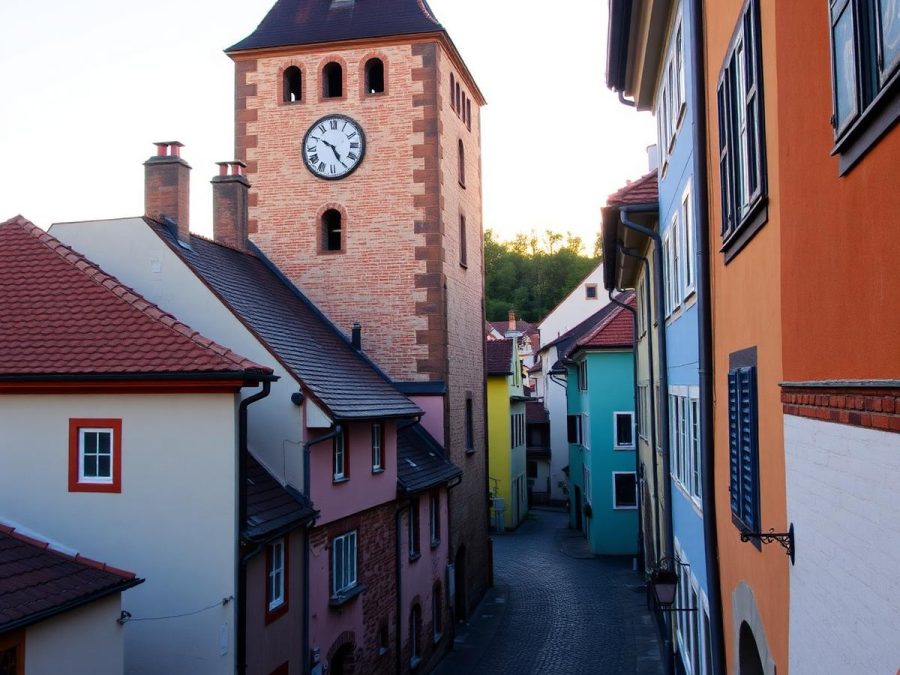
A walled hill town that people still live in, inscribed by UNESCO in 1999. Coloured houses, a clock tower with moving figures, and a covered stair…
Richiș Fortified Church
Carved masks on the vault keys and a deeply recessed west portal — unusual ornament for a village church, minutes from Biertan.
Saschiz Fortified Church
A UNESCO fortified church on the main road, with a free-standing clock tower modelled on Sighișoara's — and a village that has not been prettified.
Viscri Fortified Church
A whitewashed church inside a low fortified wall, in a village that is worth the unsurfaced road it takes to reach it.
Areas within Sighișoara & Saxon Villages
Mediaș
Mălâncrav
Richiș
Sighișoara
Where to base yourself
Towns and cities worth staying in rather than passing through.
The background
Sighișoara is the smallest of Transylvania's three walled towns and the one that has changed least. The citadel sits on a hill above the modern town, still enclosed, still lived in, and small enough to walk in an hour.
The citadel
The historic centre is inscribed on the UNESCO World Heritage list, listed in 1999. It was founded in the twelfth century by the same German settlers who built Sibiu and Brașov, and it grew as a craftsmen's and merchants' town — which is why the towers around the walls are named after the guilds that were responsible for defending them.
Inside the walls: coloured houses on cobbled lanes, the clock tower on the main square, and a covered wooden stair climbing to the church on the hill above. The house on the square is traditionally identified as the birthplace of Vlad III, the prince whose name the Dracula story borrowed.
The villages around it
This is also the best base for the fortified Saxon villages, which are the reason to give the area more than a night. Two of the seven UNESCO-listed villages — Saschiz and Viscri — are within easy reach, and the unlisted ones between them are often empty.
How to do it
Stay inside the citadel rather than below it. The town empties in the late afternoon when the coaches leave, and the evening is the part worth being there for.
Fit this into a trip
The itineraries show how the regions connect — which cities work as a base, what fits in three days, and where a longer trip is worth it.
Prefer to have the route organised for you?
Guided private trips and custom itineraries are arranged externally, with a local driver-guide.
View private tours